
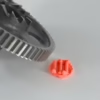
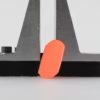
P51 SD
P51 SD
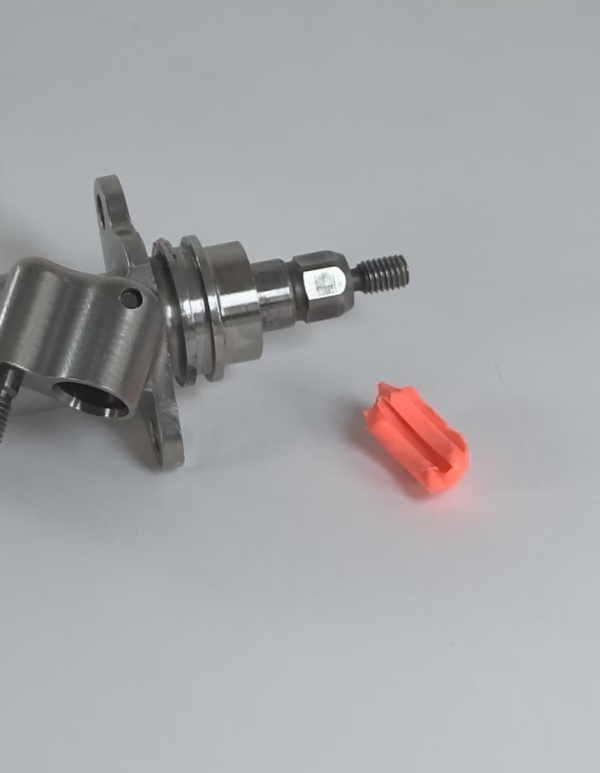
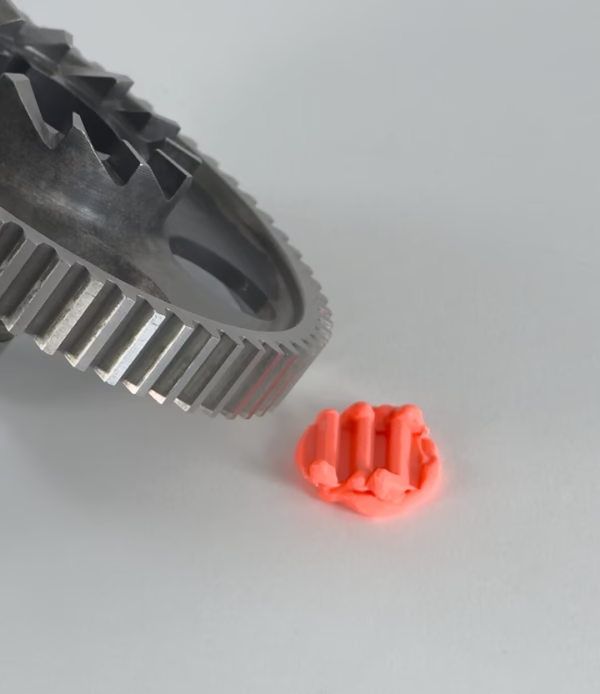
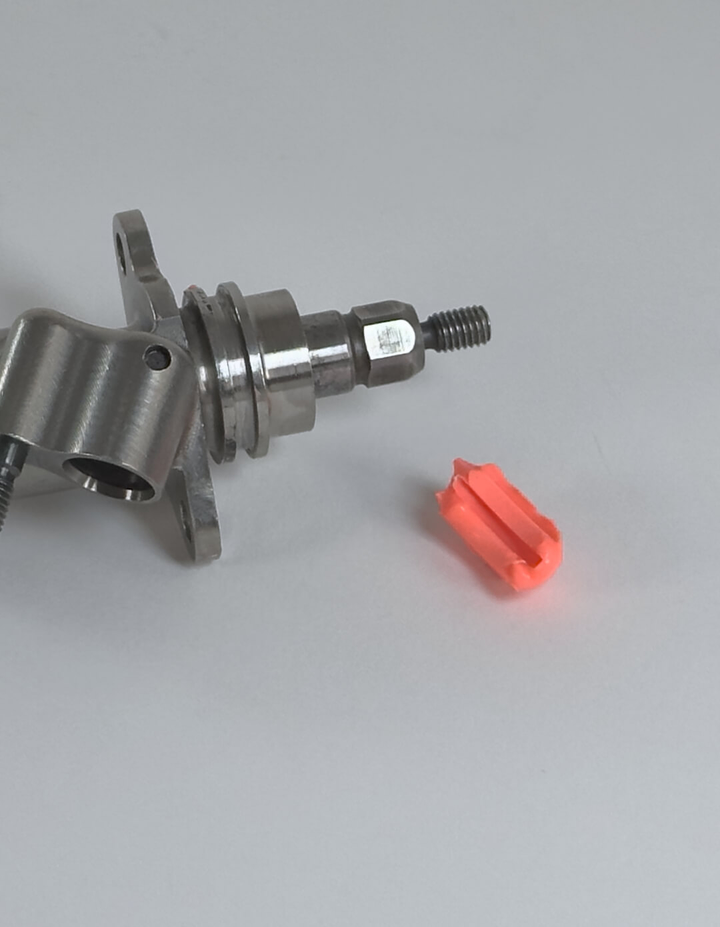
The P51 SD is the most rigid product of the range. It is dedicated to contact measurement of mechanical clearance or simple external forms.
It has a hardness of 51 Shore D, equivalent to 100 Shore A it supports no removal constraint. It is designed for applications requiring stable, non-deformable impressions.
Its unique properties make it useful for mechanical clearance, spacing, and air gap control. It polymerizes quickly in around one minute and a half, ensuring a fast setup.
The pasty consistency of P51 SD prevents it from flowing, making it easy to position on different control surfaces.
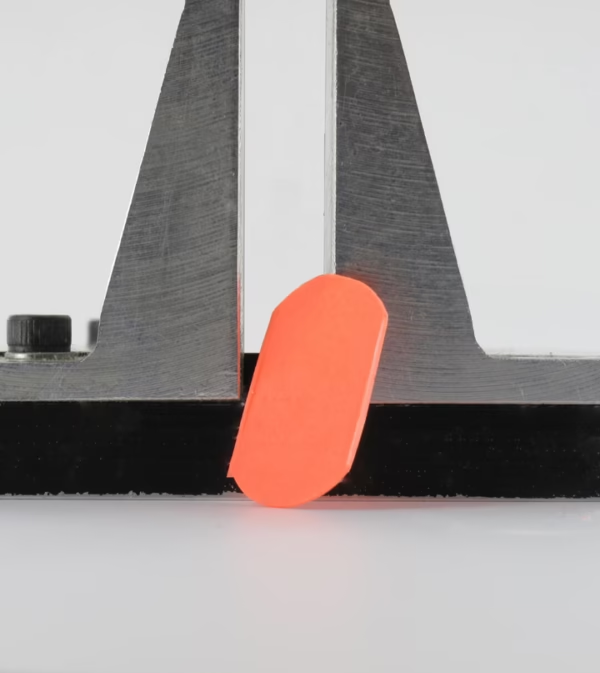
It can be crushed to a thickness of 0.1 mm, allowing for precision in various applications. This plastiform is also used for simple dimensional inspections and is compatible with contact measuring machines.
It does not accept any extraction stress, so it must be handled carefully during the demolding process.
Its rigidity and hardness make it a robust choice for certain industrial and inspection applications.
- Removal Constraint : 0%
- Initial Consistency : Pasty
- Final Consistency : Rigid
- Final Hardness : 51 Shore D
- Working Time : 00:20 min.
- Curing Time : 01:00 min.
- Polymerization Time : 01:30 min.
- Double Blade Cutter : NO
- Measurements : WITH CONTACT
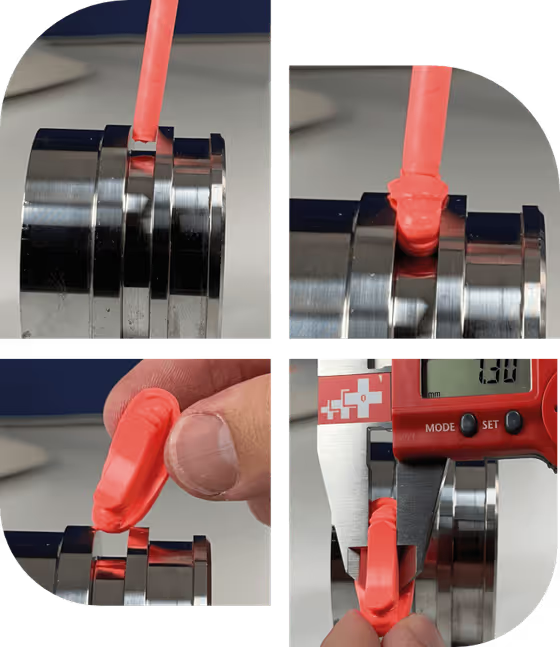
The P51 SD plastiform is useful for several specific applications, including:
- Dimensional Control: It can perform simple external forms measurements with contact measuring devices.
- Gap or Mechanical Clearence measurement: Its consistency and hardness make it a good choice to be compressed in these tiny spaces to capture their size.
However, because it cures quickly, you need to consider this factor when applying it.
Proper preparation, like degreasing the part before injecting the product, is crucial for successful polymerization.
To ensure proper application, follow the provided instructions for use.
They will guide you through the correct handling and application of this product.
Missteps, like using it on a dirty surface, could negatively affect the plastiform’s polymerization process, leading to suboptimal results.


